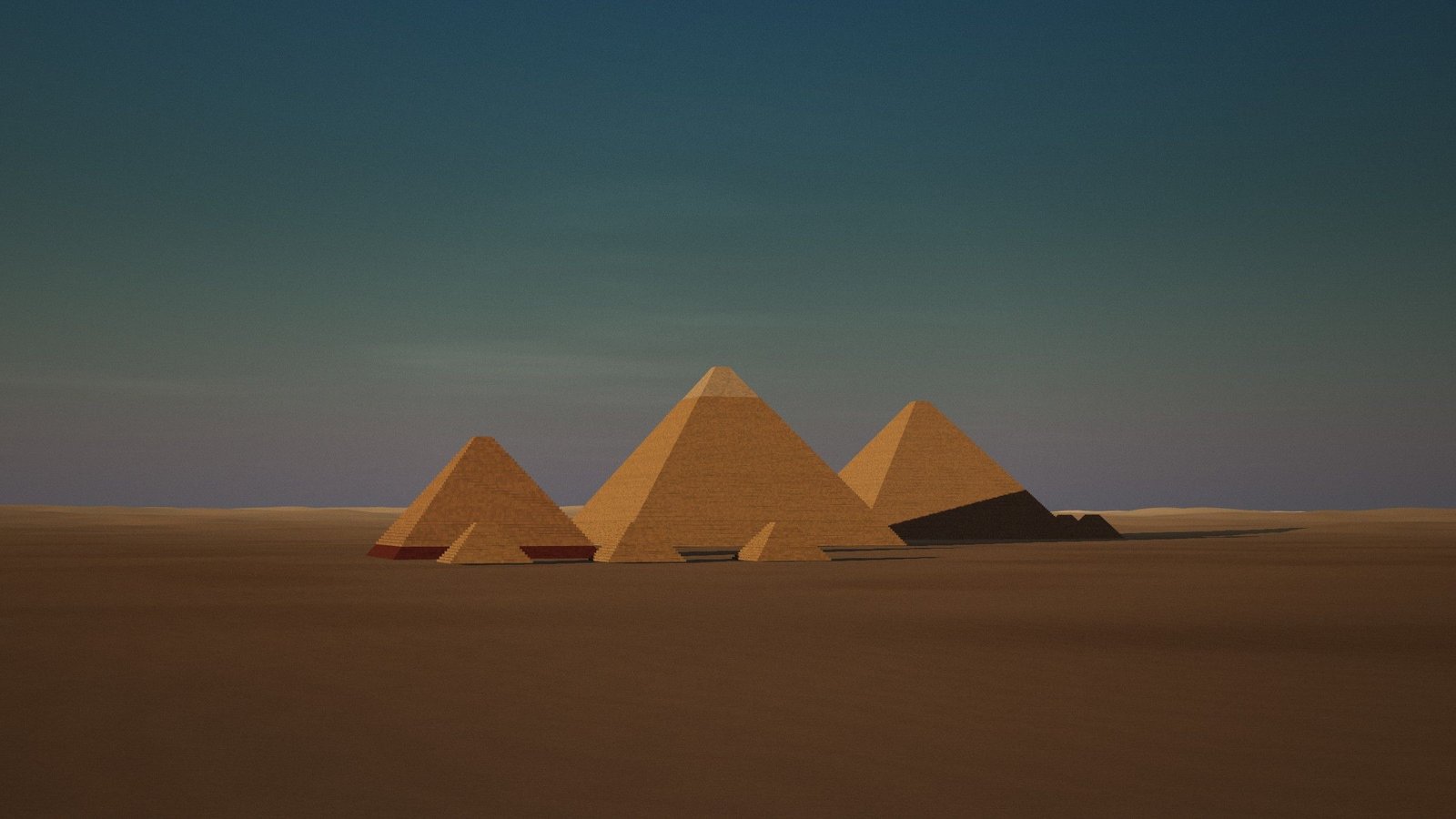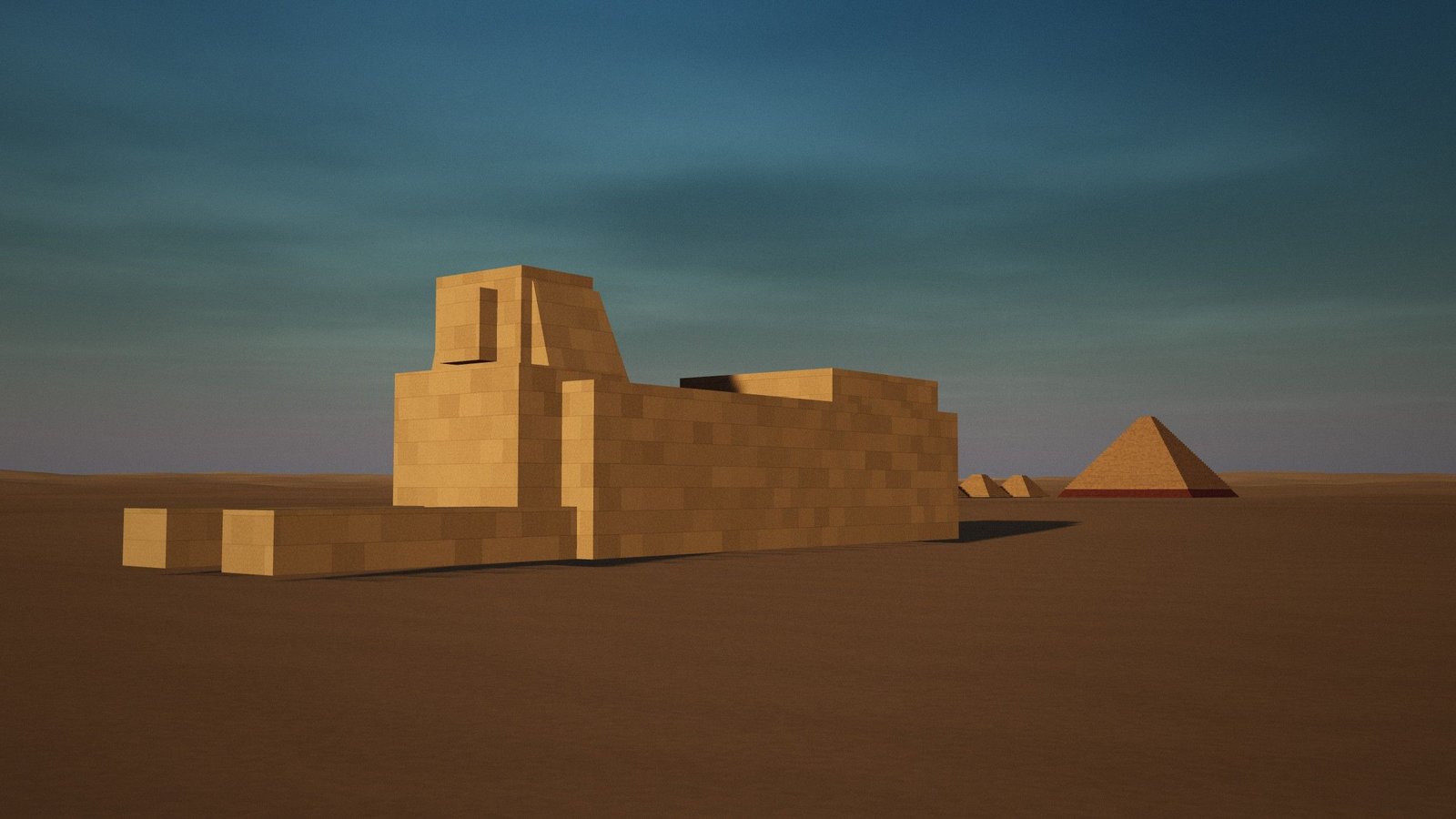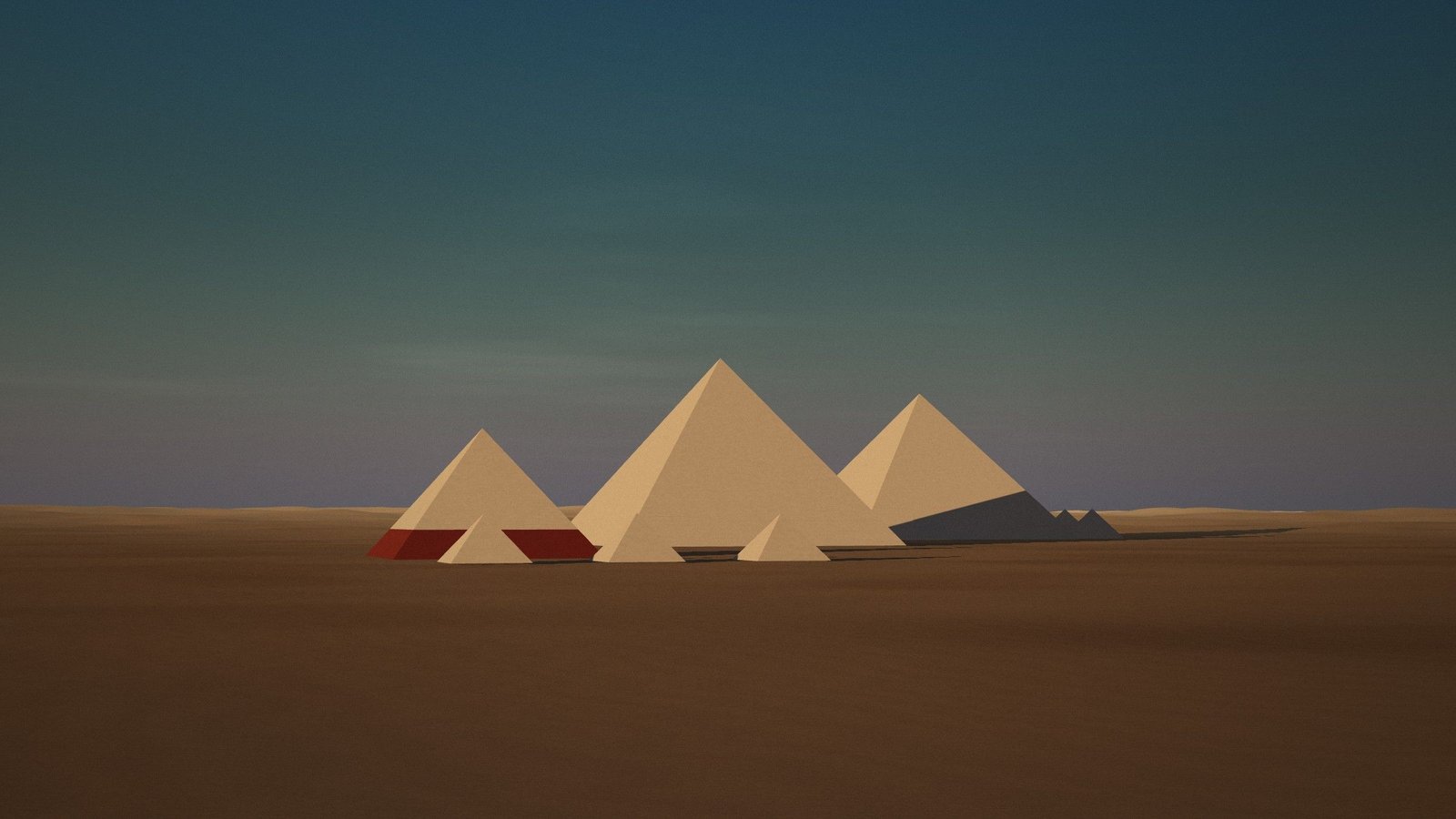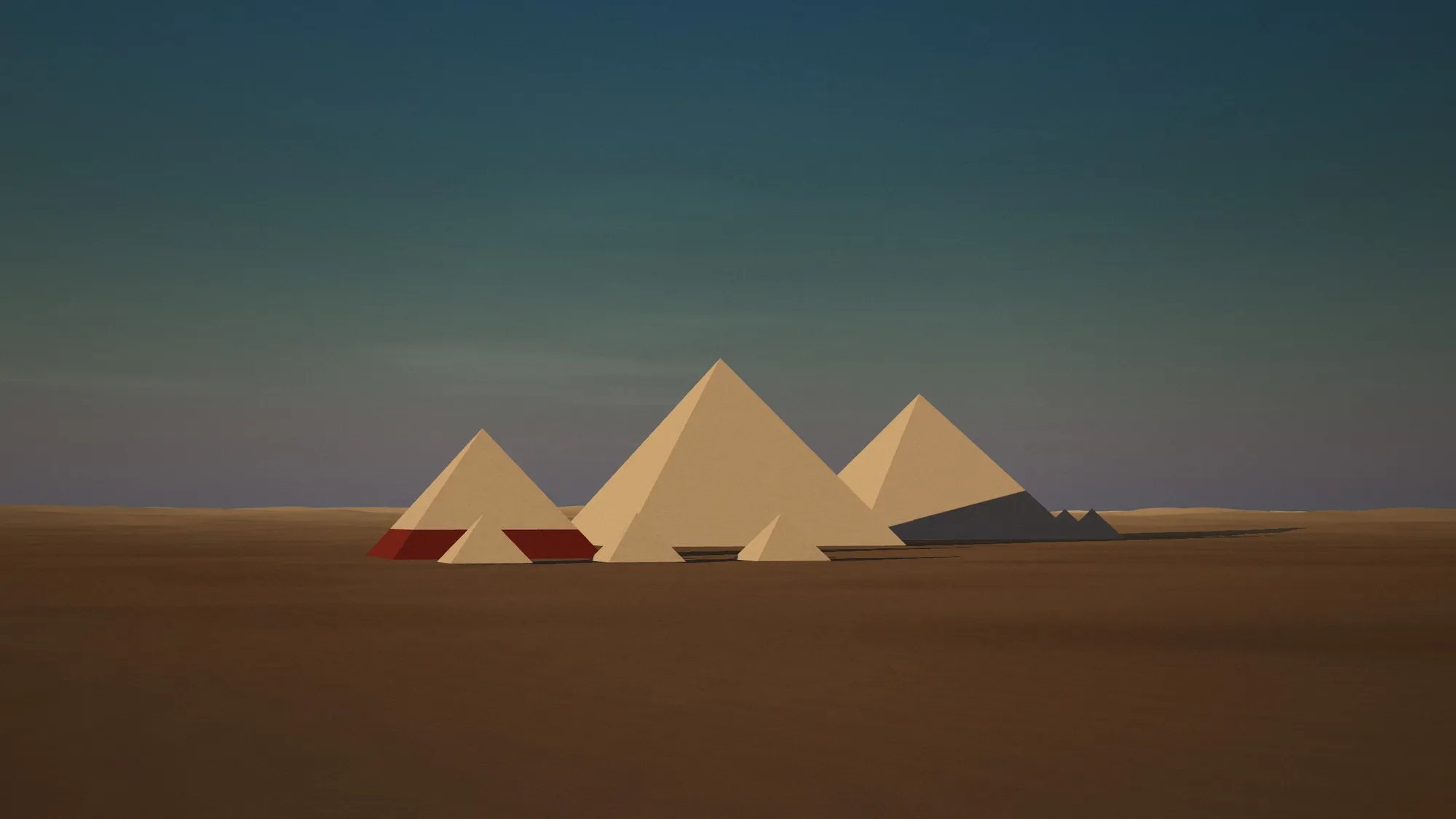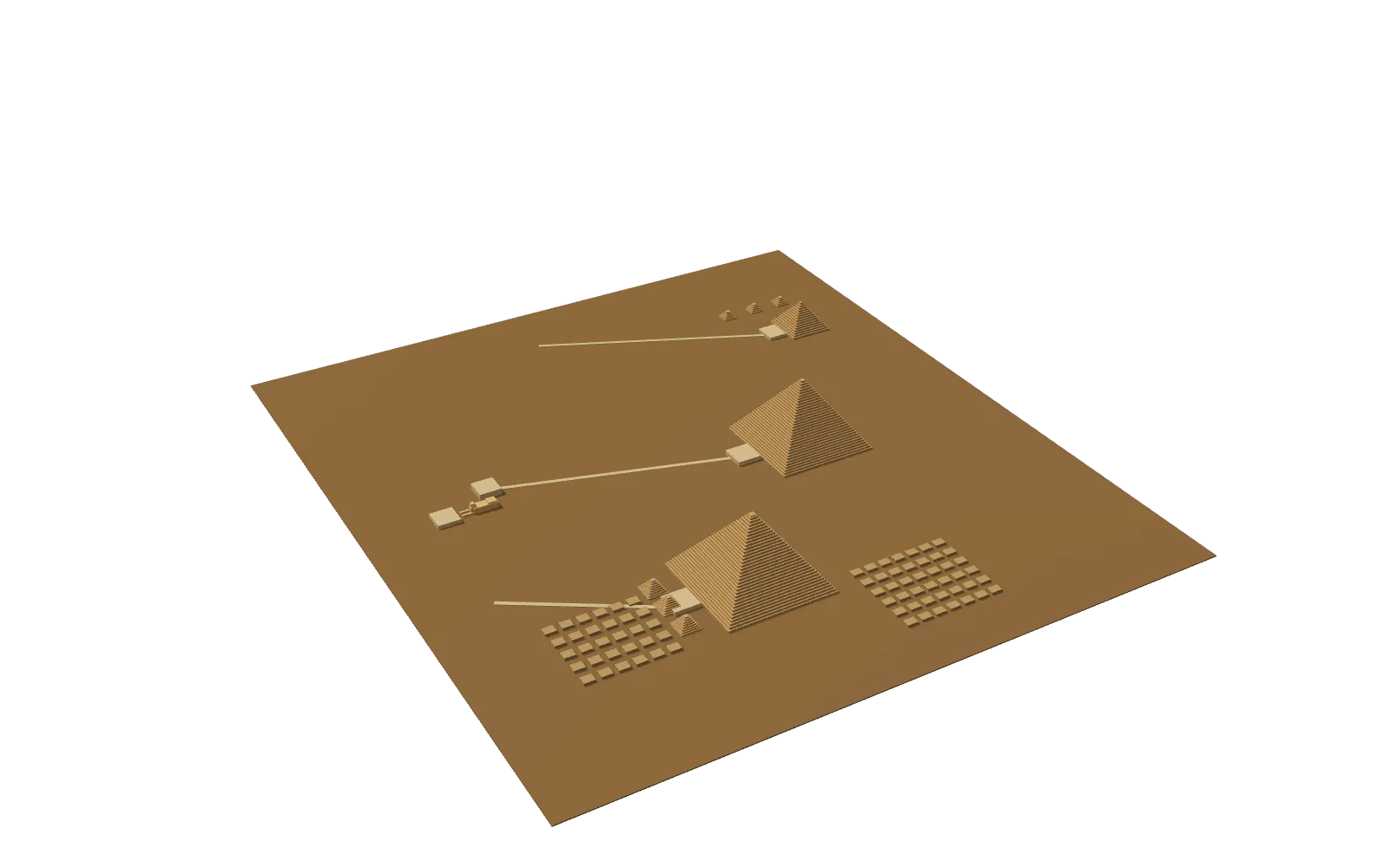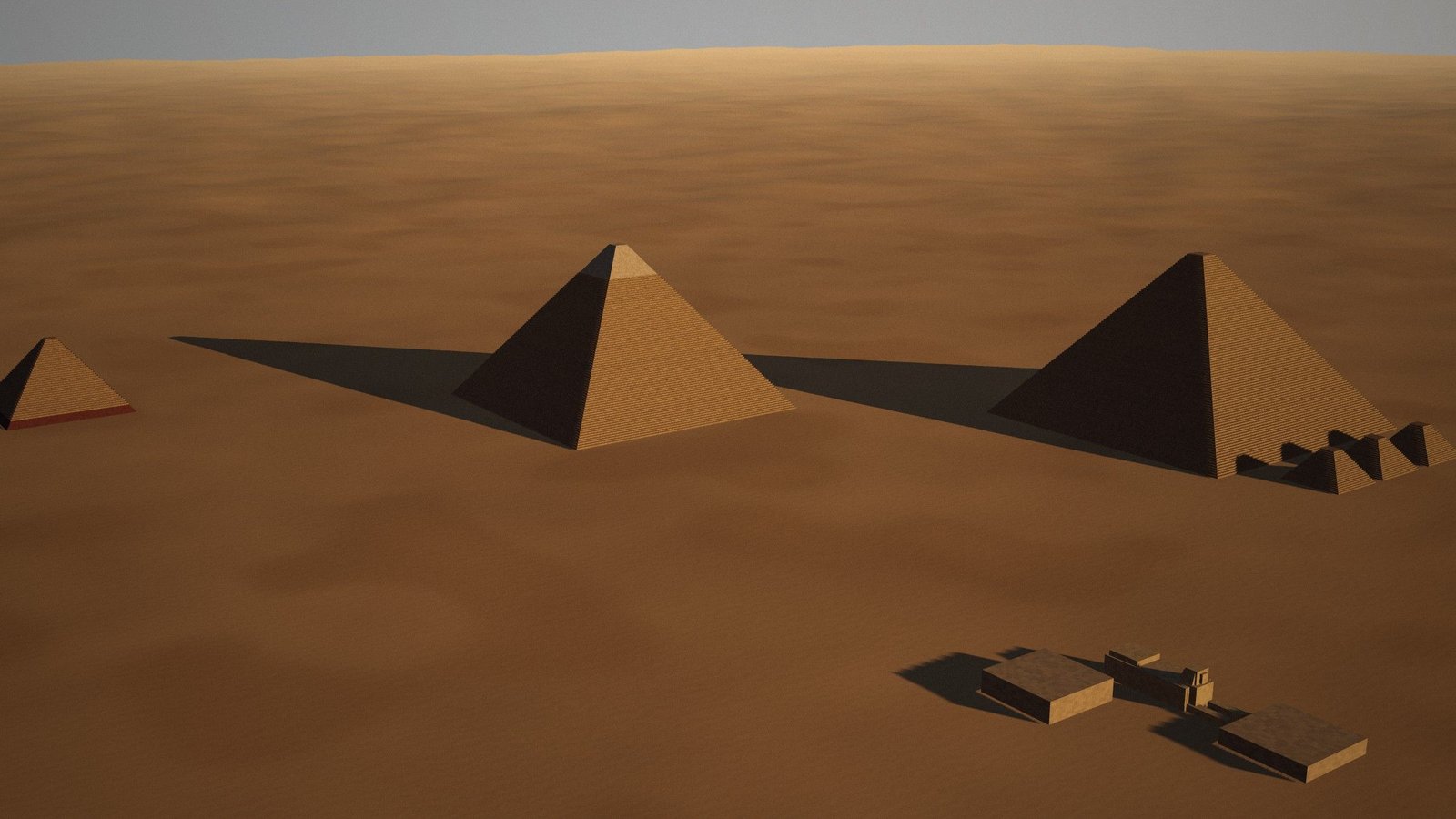
Aerial reconstruction of the Giza plateau today, with the pyramids of Menkaure, Khafre and Khufu and the queens' pyramids, and the Sphinx and valley temple in the foreground.
Reconstruction · NeoKemetAI 3D reconstruction
Monument · necropolis

Giza Plateau

West bank of the Nile, Giza

On a limestone ridge above the Nile floodplain, three kings of the 4th Dynasty built the most famous monuments of ancient Egypt. In about three generations, Khufu, Khafre and Menkaure raised their pyramid complexes here, surrounded by the tombs of their families and officials, with the Great Sphinx carved from the rock beside Khafre’s temple.

This page is the guide to the plateau: how it is laid out, when it was built, and where to go next. Start with the Great Pyramid, the largest of the three, to explore it in 3D and to see the evidence for how it was built.

Source note: dates follow the Wikipedia article “Fourth Dynasty of Egypt” and differ by a few decades between chronologies. The layout follows the Wikipedia article “Giza pyramid complex” and AERA’s publications on the workers’ town. References are at the end of the page.
Site overview

How the plateau is laid out

The Giza plateau is a limestone ridge on the west bank of the Nile, at the edge of the desert above the floodplain. Three kings of the 4th Dynasty built here: Khufu, his son Khafre and Khafre's son Menkaure. Their pyramids stand on a rough diagonal from north-east to south-west, each smaller than the last. Wikipedia, Giza pyramid complex; Wikipedia, Fourth Dynasty of Egypt

Each pyramid was the centre of a complex. A mortuary temple for the king's cult stood against its east face, and a causeway ran down to a valley temple near the floodplain; Nile waterways reached the foot of the plateau. Smaller queens' pyramids and boat pits lay beside the king's pyramid. Wikipedia, Giza pyramid complex; Sheisha et al.

Around Khufu's pyramid lie cemeteries of mastaba tombs: members of the royal family to the east, officials to the west. The Great Sphinx lies beside Khafre's valley temple, carved from the bedrock. Wikipedia, Giza pyramid complex; Wikipedia, Great Sphinx of Giza South-east of the plateau, beyond a massive stone wall, archaeologists have excavated the town where the builders lived and the cemetery of its workers and overseers. Lehner; Ancient Egypt Research Associates (AERA); Egyptian Ministry of Tourism and Antiquities

Map

Plan of the plateau

Pyramids to scale; temples, causeways and cemeteries schematic. Select a pyramid or the Sphinx.

Plan of the Giza plateauThe three pyramids of Khufu, Khafre and Menkaure run diagonally from north-east to south-west, each with a mortuary temple on its east side and a causeway down to a valley temple. The Great Sphinx lies beside Khafre's valley temple. Cemeteries of mastaba tombs flank Khufu's pyramid to the east and west; quarries and the workers' town lie to the south-east.Quarries(Central Field, approx.)Wall of the CrowWorkers' town(Heit el-Ghurab, approx.)Eastern cemeteryWestern cemeteryKhufuKhafreMenkaureSphinxMortuary templeBoat pits (approx.)Khafre's causewayValley templeSphinx templeMenkaure valley temple (approx.)N200 m
Reconstruction note: the three main pyramids are drawn to their published base sizes; their relative positions, and everything else on this plan (temples, causeways, boat pits, cemeteries, quarries, the Sphinx and the workers' town), are indicative placements by us and have not been checked against a survey plan. Dashed causeways are only partly traced. Select a pyramid or the Sphinx to open its page.

Anatomy of a pyramid complex

Anatomy of a Giza pyramid complexFrom east to west: a harbour or canal at the edge of the floodplain, a valley temple, a covered causeway climbing the plateau, a mortuary temple against the pyramid's east face, the pyramid with its satellite and queens' pyramids, and boat pits.Harbour / canalValley templeCovered causewayMortuary templePyramidQueen's pyramidBoat pitEast (Nile)West (desert)
Reconstruction note: schematic, not to scale; the elements are generalised and do not reproduce any one complex. Each of the three kings' complexes at Giza has a valley temple, a causeway and a mortuary temple against the pyramid's east face; the valley temples lay near waterways linked to the Nile. Wikipedia, Giza pyramid complex; Sheisha et al.
Interactive model

The plateau in 3D

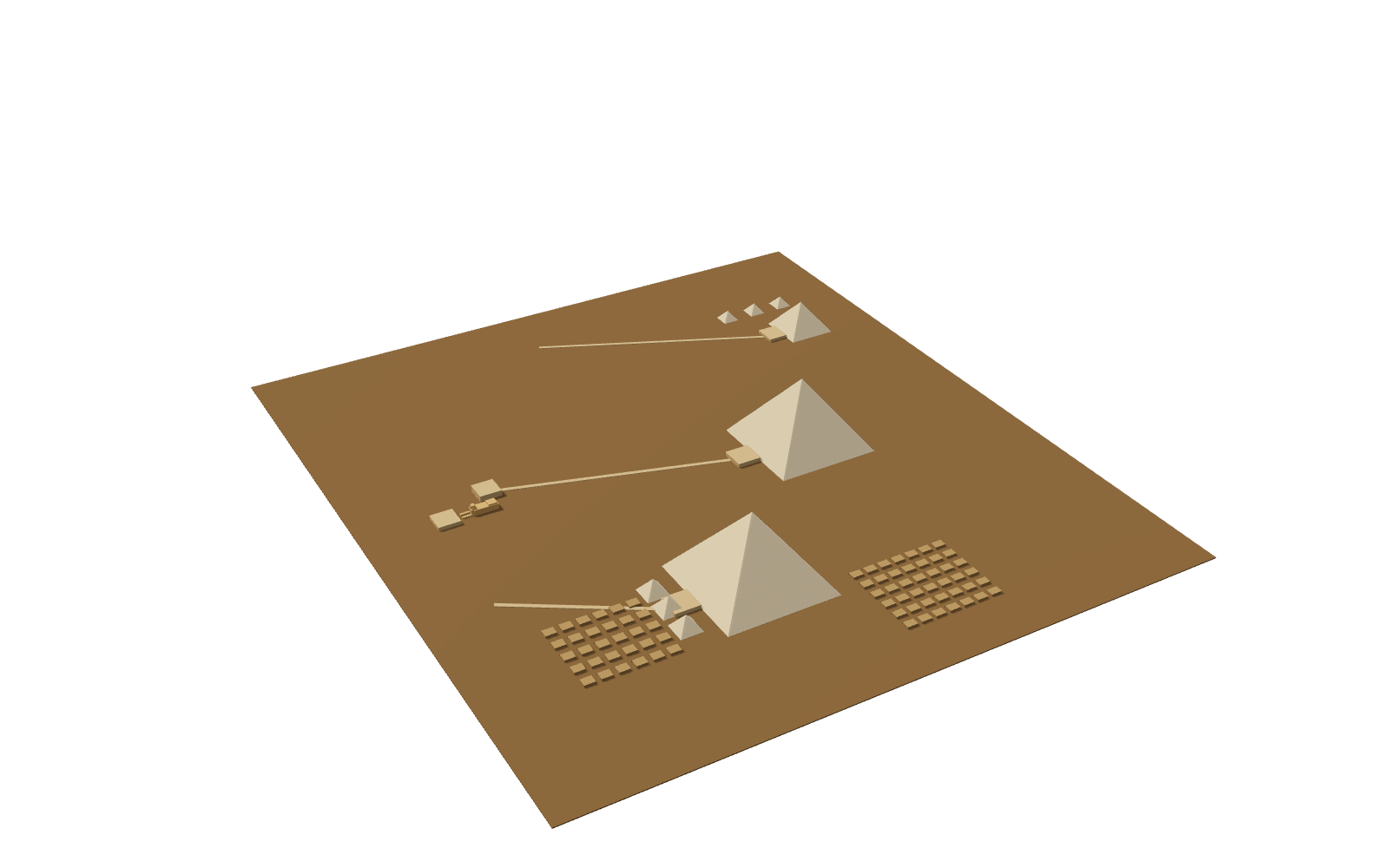
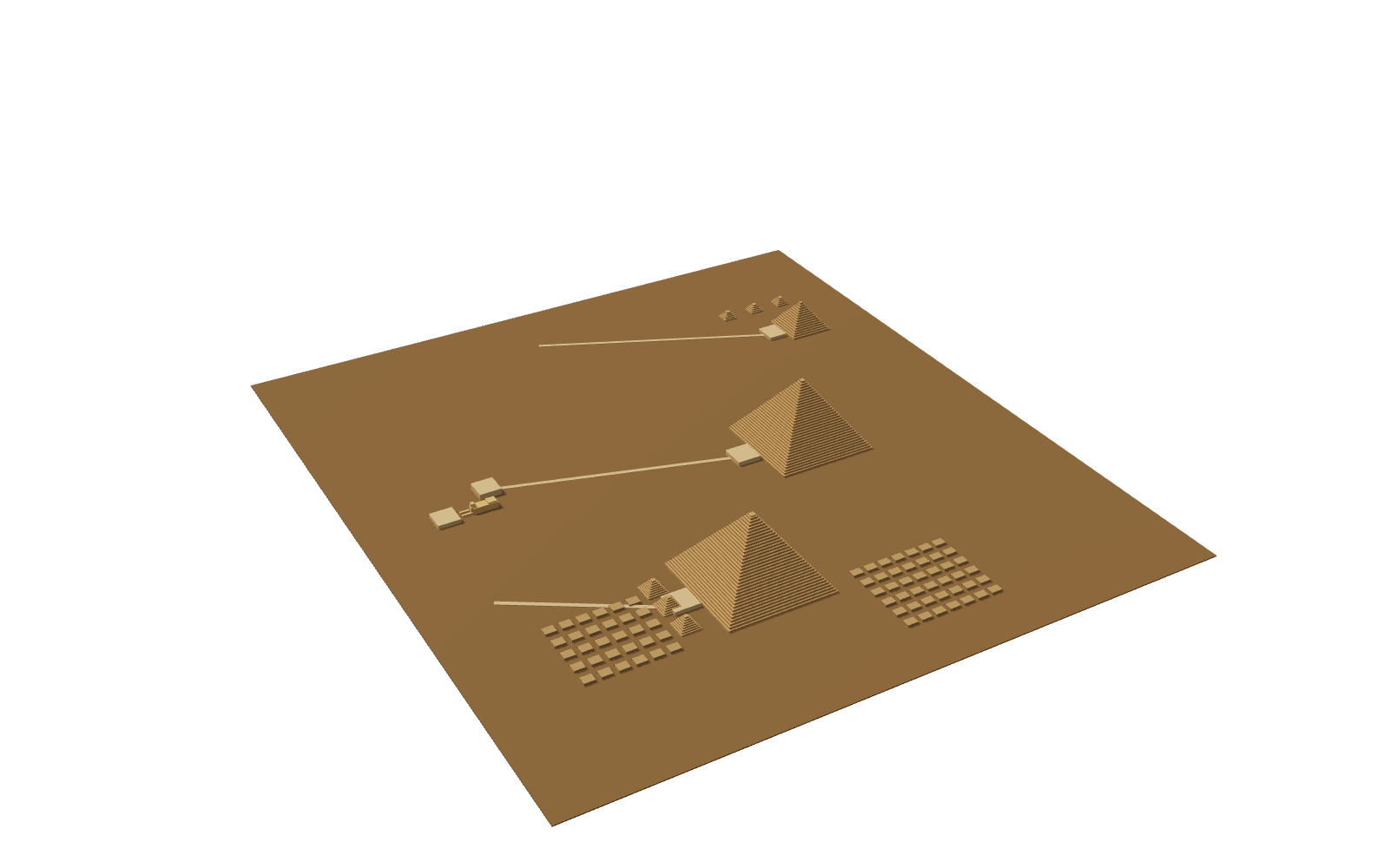
A simplified model of the plateau. Compare the pyramids as built with how they stand today; numbered markers link to their pages.

Monument
Simplified 3D model of the Giza plateau with the three pyramids, queens' pyramids, temples, causeways, the Sphinx and the mastaba cemeteries. View: As built.

Reconstructed visualisationThe three main pyramids and the queens' pyramids with their casing. Pyramid bases to published sizes; positions indicative. Temples, causeways and cemeteries are schematic blocks placed by us.

Schematic NeoKemetAI model at 1:1000. The three main pyramids follow published base sizes; their positions and everything else (queens' pyramids, temples, causeways, cemeteries, the Sphinx) are indicative placements by us, not surveyed.

Old Kingdom

Giza in the 4th Dynasty

The plateau was built in about three generations, in the 26th and 25th centuries BCE.

  1. Sneferuc. 2613–2589 BCE

    Builds the Bent and Red Pyramids at Dahshur; the Meidum pyramid is also attributed to him.

  2. Khufuc. 2589–2566 BCE

    Great Pyramid at Giza.

  3. Djedefrec. 2566–2558 BCE

    Pyramid at Abu Rawash, several kilometres north of Giza.

  4. Khafrec. 2558–2532 BCE

    Second pyramid; the Sphinx is usually attributed to him.

  5. Menkaurec. 2532–2503 BCE

    Third pyramid, left unfinished at his death.

  6. Shepseskafc. 2503–2498 BCE

    Completes Menkaure's complex; builds a mastaba tomb (Mastabat al-Fir'aun), not a pyramid.

The Old Kingdom, 4th Dynasty. Reign dates are approximate and differ by a few decades between chronologies; highlighted reigns built at Giza.
Explore the plateau

Monuments, kings and films

The three pyramids of Giza at golden hour seen from the south-west desert, Menkaure in front, Khafre in the centre and Khufu behind.

pyramid

Great Pyramid of Giza

Giza Plateau · c. 2570 BCE

For more than 3,700 years the Great Pyramid was the tallest human-made structure in the world. It was built for Khufu, second king of the 4th Dynasty, during his reign (c.…

Simplified 3D massing model of the Great Sphinx lying on the plateau, with the pyramid of Menkaure and its queens' pyramids in the distance.

sphinx

Great Sphinx of Giza

Giza Plateau · c. 2500 BCE

The Great Sphinx is among the oldest known monumental sculptures in Egypt: a recumbent lion with the head of a king, about 73 m long and 20 m high, carved from the limestone of…

The Giza pyramids as Khufu's successors would have seen them, cased in polished white limestone.

4th Dynasty

Khufu

Cheops to the Greeks · c. 2589–2566 BCE

Son of Sneferu, the most prolific pyramid builder in Egyptian history, Khufu inherited both the know-how and the organisation to attempt something without precedent. The result…

The pyramids of Giza at golden hour; Khafre's pyramid in the centre still keeps a cap of its casing near the summit.

4th Dynasty

Khafre

Chephren to the Greeks · c. 2558–2532 BCE

A son of Khufu, Khafre built the second pyramid on the Giza Plateau. It is slightly smaller than his father's; part of its original limestone casing survives near the summit.

Reconstruction of the Giza pyramids as built; Menkaure's smaller pyramid in front has lower courses of granite.

4th Dynasty

Menkaure

Mycerinus to the Greeks · c. 2532–2503 BCE

Menkaure, a son of Khafre, built the third pyramid on the Giza Plateau. It is far smaller than the Great Pyramid, but its lowest sixteen courses were cased in granite, part of…

Later royal tombs: the tombs of the Valley of the Kings and the Valley of the Queens. The Giza mastaba cemeteries, boat pits and temples will get their own pages.

References and source notes

Reference works consulted

Encyclopedia articles read to check specific facts; they cite the primary literature listed with them, which was not itself read.

Standard references cited but not consulted

Recognised works named for context and further reading. They were not read when this page was checked, so no claim here rests on them alone. Marked * in inline citations.

Reconstruction assumptions

  • The plan and the 3D plateau model draw the three main pyramids at their published base sizes. Their relative positions, and the positions and shapes of the temples, causeways, boat pits, cemeteries, quarries, the Sphinx and the workers' town, are indicative placements by us, not traced from a survey plan.
  • The "as built" view shows every pyramid fully cased; the "today" view simplifies the stepped cores and the surviving casing.
  • The pyramid-complex diagram is generic and does not reproduce any one complex.
Gallery

Illustrations

Location

On the map

Tap a marker for details, or zoom out to see the whole Nile valley.

Map showing the location of Giza PlateauMemphisThebesAbydosAmarnaHierakonpolisElephantineAvaris / Pi-RamessesTanisSaisBubastisMendesSebennytosHerakleopolisItjtawyBuhenSemnaKV34 · Thutmose IIIKV43 · Thutmose IVKV62 · TutankhamunKV17 · Seti IKV7 · Ramesses IIQV66 · Queen NefertariStep Pyramid of DjoserGiza PlateauGreat Pyramid of GizaGreat Sphinx of GizaKarnak Temple ComplexMortuary Temple of HatshepsutAbu Simbel TemplesMedinet Habu
Coastline and Nile: Natural Earth 1:10m (public domain). Modern features such as Lake Nasser are omitted. Site positions are approximate.